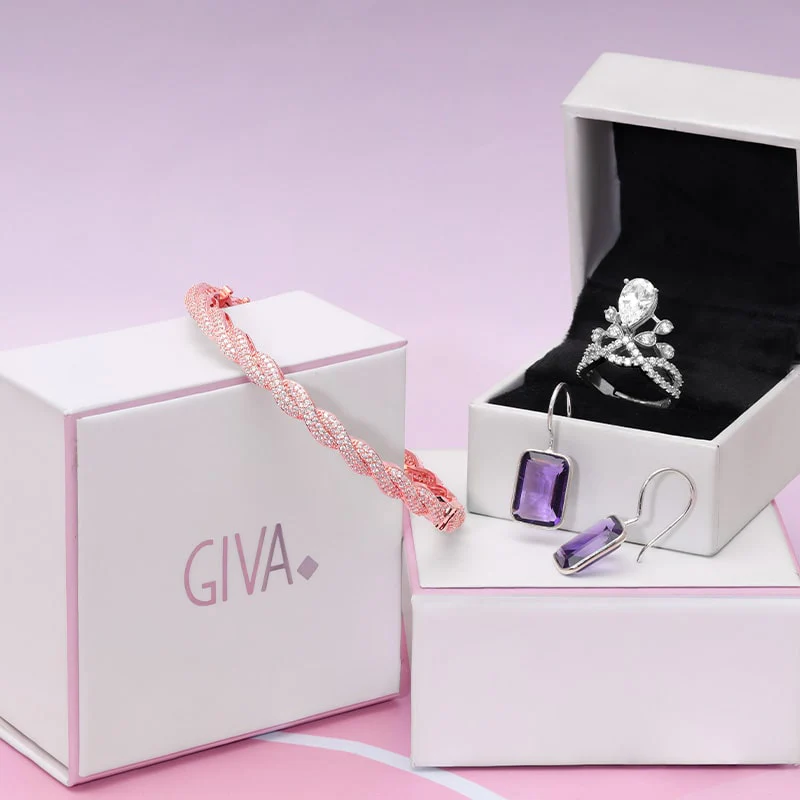
In 2019, Ishendra Agarwal — an electrical engineer from IIT Kanpur — quit consulting and launched a jewellery brand out of a 2BHK apartment in Bengaluru. His co-founders were Nikita Prasad, a NIFT-trained designer, and Sachin Shetty, an investment associate. The brand was GIVA. The bet was silver. The starting capital was ₹10 lakh of Ishendra's own money. Six years later, GIVA is one of India's largest D2C jewellery brands, valued at roughly ₹4,000 crore.
The pitch, in 2019, sounded almost naïve. Every serious Indian jewellery brand — CaratLane, BlueStone, Melorra, Tanishq — was selling gold. Silver, in India, was thought of as either heirloom-ceremonial or teenager-costume; there was no category in between. Gen Z and millennial women who wanted fine, everyday jewellery had a bad choice: either overspend on gold, or wear artificial pieces that turned green in a week.
Ishendra's founding sentence was one line long: "Why do Indian women have to spend so much money on fine jewellery?" The rest of the company, six years and ₹518 crore in revenue later, is a very direct answer to that sentence.
The founding trio
Three people, three complementary problems solved.
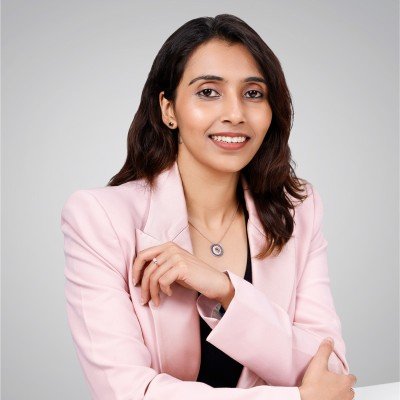
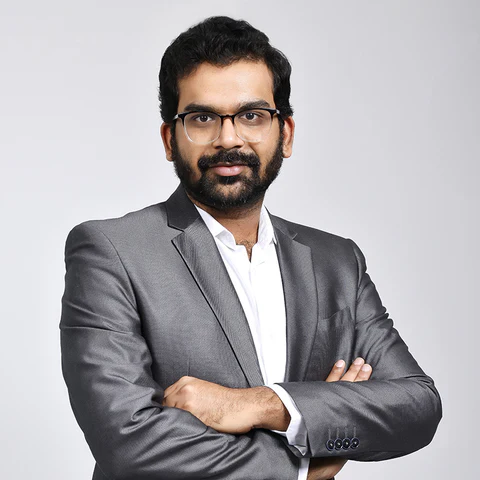
The third co-founder, Sachin Shetty, brought investment and category discipline in the early years. Between the three of them, GIVA had — from month one — an engineer at the top, a designer in the middle of the product, and a finance mind on the numbers. That is a very specific hiring order for a jewellery brand, and it shows up in every decision the company made afterwards.
The founding, in dates
- April 2019. GIVA is founded in Bengaluru. Seed capital: ₹10 lakh from Ishendra Agarwal, with friends-and-family contributions.
- Aug 2019 – Jul 2020. Early seed rounds totalling roughly $675,000, from India Quotient, Snapdeal's Kunal Bahl, and ShareChat co-founder Ankush Sachdeva.
- Jan–Feb 2022. First omnichannel move: shop-in-shop counters inside Shoppers Stop and Reliance Trends. Two years from launch to being on the shelf of India's largest retail formats.
- May 2022. First standalone GIVA store opens in Bangalore.
- 2022. One million customers served — three years after launch.
- 2023. Gold launches. The category expansion Ishendra had been signalling since Series A becomes real.
- 2025. "GIVA Go" — same-day delivery in Mumbai, Delhi, Bengaluru and Hyderabad. ₹530 crore Series-C round led by Creaegis.
- FY25. ₹518 crore in revenue, 89% year-on-year growth. 280 stores. Valuation ≈ ₹4,000 crore.
The category bet: silver, as a first grown-up piece
.jpeg)
Every incredible brand we filmed for MOIB had one truth simple enough for a stranger to repeat. For GIVA, that sentence — arrived at unprompted by a customer we interviewed for the episode — was: "It's the first grown-up jewellery I bought for myself."
The company had not written that sentence. It had earned it by making the same three commitments, consistently, since 2019:
There are so many misconceptions around silver. People think it is not as valuable as gold, tarnishes quickly and does not last long. We spent six years disproving that, one order at a time. — Sachin Shetty, Co-founder, GIVA
The face: Anushka Sharma
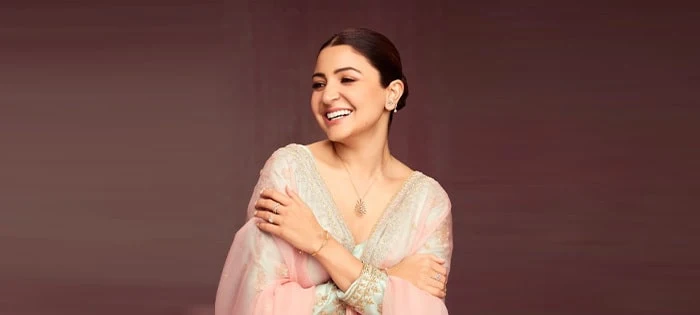
Ambassador choice is one of the sharpest tells for whether a brand has understood its own customer. GIVA's roster reads intentionally: not the loudest names in Bollywood, but the ones whose public identity is closest to the brand's target — women who read as accomplished, self-purchasing, and unshowy. Bhumi Pednekar, Shruti Haasan and Barkha Singh set the register. Anushka Sharma, the current face, extends it.
The GIVA customer is not being sold aspiration. She is being told a piece she can afford, that she chose for herself, is legitimate fine jewellery — and the ambassador simply confirms what she was already going to think.
The design language, at scale
.jpeg)
The design vocabulary is deliberately narrow: minimalist silhouettes, thin bands, delicate stone settings, restrained use of colour, and rose- and gold-plated finishes that skew younger than a traditional jeweller's catalogue. Nikita Prasad's team designs in-house, releases in drops, and re-orders the winners. This is closer to how a fashion brand operates than a jeweller — and it is the reason a GIVA piece is legible in a thumbnail on Instagram, which no legacy Indian jewellery brand had cracked before 2019.
The distribution stack
GIVA's growth is a case study in refusing to pick between D2C and offline retail. From 2019, they were online-first, with a strong website and marketplace presence. From 2022, they were also inside Shoppers Stop, Reliance Trends, and a standalone flagship in Bangalore. By 2025 they had launched GIVA Go, a proprietary same-day delivery service in four metros, and started fulfilling from quick-commerce apps like Blinkit and Instamart.
In October 2025, GIVA closed a ₹530 crore Series-C led by Creaegis, taking total capital raised to roughly $131 million. The stated use of funds: 145–150 new stores in FY26 (mostly Tier-II), a deeper lab-grown diamond line, and continued investment in supply chain. The company has said publicly it projects ₹809 crore in revenue by the end of FY26 with profitability in sight.
Where they sit against the MOIB framework
Our seven-trait editorial framework held up cleanly on this one. GIVA was almost designed against it.
The through-line
Six years is not a long time for a jewellery brand. Legacy houses count in centuries. What GIVA got right, in that compressed window, is the specific stack of decisions Ishendra, Nikita and Sachin refused to unmake: bet on silver, not gold; ship the piece with a certificate; offer lifetime plating; go omnichannel before it was fashionable; keep the design language legible in a phone thumbnail; put the founder on the record. Every one of those was in the 2019 pitch. None of them were quietly abandoned when the company got bigger.
That, more than the ₹4,000-crore valuation or the ambassador, is why GIVA is a case worth filming for MOIB. It is the cleanest recent example we found in India of a brand that decided what it was, and refused to become anything else on the way up.
Every incredible brand had a moment early on where the easier move was to become a bigger version of the industry. The good ones refused. GIVA refused six years ago and hasn't stopped.
episode on JioHotstar.
A twelve-minute feature — inside the Bengaluru studio, on the shopfloor of a GIVA flagship, and on the record with founders Ishendra Agarwal and Nikita Prasad.
GIVA "About Us" page · YourStory profiles of Ishendra Agarwal (2021, 2022) · Inc42 D2C brand feature (Aug 2022) · Entrepreneur India coverage of the Creaegis Series-C (Oct 2025) · The Hot Startups founder analysis (Jan 2026) · Brandowner Detail founder profile (Apr 2026) · The Org executive profile · MOIB Editorial Desk field notes.